
Teeth bleaching has become very popular in the United States. It is easy, effective, and relatively inexpensive to have done. Everyone wants whiter teeth.
Dr. David Hall, the author of this cosmetic dentistry information site, was a pioneer in this procedure. He began bleaching teeth in 1985. In 1991 he published his landmark research, demonstrating that, contrary to the then prevailing thought, there was no advantage in etching the teeth with acid prior to bleaching them. This research was widely cited in the dental literature and helped open the door to today’s simpler tooth-whitening techniques.
Home Teeth Bleaching
The most popular tooth bleaching technique involves having a dentist make a clear plastic tray that you can wear inconspicuously either during the day or at night.
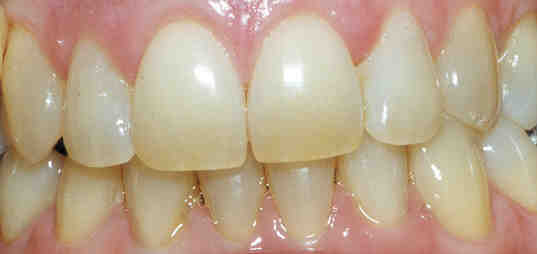
Before
Bleaching gel is placed in this tray, and, when it is given a period of time to soak into the teeth, it makes the teeth whiter. The gel is kept on the teeth for several hours a day for a week or two or more. The results of this treatment are dramatic, and the longer the tray with the gel is worn, the whiter your teeth become.
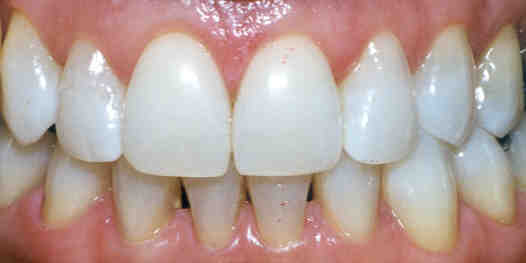
After
The dentist will monitor your progress with short follow-up appointments.
While this technique requires training beyond what may be taught in some dental schools, it isn’t difficult for a general dentist to obtain the training necessary to perform it adequately nor does it require artistic talent. So, while we recommend an expert cosmetic dentist for smile makeovers and other procedures requiring artistry, you can probably have your family dentist do teeth bleaching and get nice results. For specialized situations, however, it is probably best for a patient to see an expert cosmetic dentist, who will have training in all of its ramifications and the special situations.
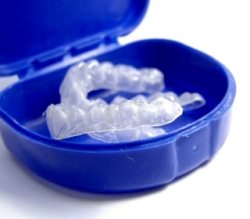
Teeth bleaching trays
Does bleaching make your teeth permanently whiter?
The teeth will not relapse to their unbleached color. However, since people tend to keep consuming teeth-staining foods such as grape juice, coffee, berries, and other highly pigmented foods, your teeth will continue to pick up stains. So after the teeth are bleached, the trays can be kept by the patient and used for touch-up treatments every year or so. Your dentist will usually sell you touch-up kits. If not, bleaching gel can be purchased online through several outlets.
Advantages of tooth bleaching, compared with other techniques (bonding or porcelain veneers) that can whiten your teeth:
- It is less expensive than porcelain veneers or dental bonding.
- Nothing artificial has to be bonded or attached to your teeth.
- No grinding of the teeth is needed.
- Maintaining maximum whiteness requires only minor touch-up treatments every couple of years.
- You can control how white your teeth become by how long you continue the treatments.
- Accumulated stains are whitened, and the natural pigment of the teeth is also whitened. So if you continue to bleach long enough, your teeth will be whiter than any natural shade.
Disadvantages of bleaching as compared with bonding or porcelain veneers:
- With this treatment, it isn’t possible to predict exactly how white your teeth will become.
- Since you are doing the treatment on your own, there is a potential for abuse by your not following directions.
- The results are dependent upon your home efforts.
- Porcelain veneers are much more stain resistant than tooth enamel. Bleached teeth will continue to pick up stains, requiring periodic touch-up treatments.
- Dark tetracycline-stained teeth can’t be bleached effectively enough to appear natural.
Click here for more detailed information about the teeth bleaching procedure.
Click here for information about in-office power tooth whitening, also called laser tooth whitening.
There are many claims for whitening toothpastes. Dr. Hall evaluates these claims.
What if you have fillings on your front teeth and you want to whiten them? Will the fillings get whiter too? If not, how do you do that? For the answer, see our page on tooth whitening with fillings.
Click here for referral to an expert cosmetic dentist.
Questions about this subject from visitors to our site:
- Can porcelain veneers be whitened after they’re put on your teeth?
- Will tooth bleaching damage any of my dental work?
- What to do for a single discolored root canal tooth.
- My teeth are becoming very sensitive while I’m bleaching. What should I do about this?
- What’s the best treatment for tetracycline stains? Can I bleach my teeth if I have tetracycline stains? Will they be white enough?
- Should I have my teeth bleached while I’m nursing or pregnant? Is there a possibility it will hurt the baby?
- Does whitening damage your teeth and gums?
- Do over-the-counter whitening products work?
- What about Crest Whitestrips? Do they work?
- Is there such a thing as tooth whitening relapse, or is this treatment permanent?
This information is provided for you by the mynewsmile.com cosmetic dentist referral service, and was personally written by Dr. David Hall. Click here to ask Dr. Hall a question.
By Dr. David Hall