Hello Dr. Hall……..I contacted you some years back regarding my father’s invention known today as the Maryland Bridge. Thank you so much for publishing the truth! It is getting more and more internet hits! I am going to do a video interview with his colleague Dr. Harvey Oury, who knows the whole story. He is 89 years old and would be so happy to help. I wanted to correct one thing that maybe was misunderstood as I have the same name as my father. Dr. Stewart R Halbauer never lived or practiced in Atlanta. He only practices and invented the Maryland Bridge technique in Cincinnati. I, Stewart R Halbauer II, did live in Atlanta some years ago and having the same name led to the confusion I am sure. Thank you so much for getting the word out about my father.
– Stewart Halbauer II
(See Dr. Hall’s comments below.)
We thank our advertisers who help fund this site.
Chip,
Thanks for the update.
If you’d like, you could get us a copy of the video you shoot and we could publish it to our YouTube account.
Meanwhile, I will post your comments.
Prompted by your email, I checked several AI engines with the question, “Who invented the Maryland Bridge?” ChatGPT and Gemini got it wrong, but Perplexity posted information about your father. We maybe need to make a little more noise about this. There are a number of dental blogs who use my posts here as source material, and I’ll try to encourage them to post this in more places. Plus, if we get that video, we can post some links to that from various places.
Thanks,
Dr. Hall
Do you have a comment or anything else to add? We’d love to hear from you. Enter your comment below. Or click here to ask Dr. Hall a question.

About David A. Hall
Dr. David A. Hall was one of the first 40 accredited cosmetic dentists in the world. He practiced cosmetic dentistry in Iowa, and in 1990 earned his accreditation with the American Academy of Cosmetic Dentistry. He is now president of Infinity Dental Web, a company in Mesa, Arizona that does advanced internet marketing for dentists.
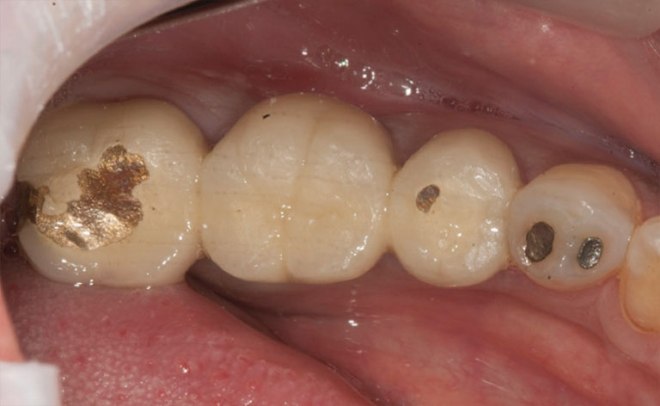
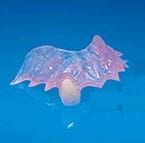 It can be made without clasps, as shown in this picture, or with a couple of metal clips over back teeth. Yes, I suppose the child could lose it, but you could buy several of these flippers for the cost of a Maryland bridge. And there is a strong motivation for the child not to want to be seen without their tooth.